Key Takeaways
Whether you run a single studio, a spa chain or a distribution business, the search usually starts the same way: "cold plasma vs fibroblast — what is the difference, and which one do I actually need?" Both technologies carry the word "plasma", both sit in the professional skincare category, and both are often shown side by side in supplier catalogs. But they serve different client requests and build different revenue models. This guide breaks down the practical differences — mechanism, downtime, staffing and service menu fit — so you can decide what belongs in your first (or next) plasma purchase.
A fibroblast plasma pen uses a small, controlled electrical arc delivered point by point across the treatment area. The tiny spots of warmth cause the skin surface to contract immediately, which is why this technology is associated with visible tightening on targeted zones: eyelid area, smile lines, jawline and neck — the places clients point at in the mirror.
What buyers must plan for is the recovery window. The treated points form small crusts or dots that typically remain visible for about 5–10 days before they fade. That makes it a results-driven, appointment-planned service rather than a lunchtime walk-in treatment — and it is exactly why client consultation and aftercare guidance matter so much for this device class.
A cold plasma beauty device generates non-thermal (cold atmospheric) plasma — an ionized gas that stays near room temperature when it reaches the skin. Instead of creating surface points, it works across the whole treatment area: helping manage surface bacteria, calming the appearance of redness, supporting renewal, and improving how the skin takes up serums applied afterwards.
The business-relevant differences are clear: no crusts, no visible downtime, sessions of about 15–30 minutes, and comfort across all common skin types — including sensitive skin and darker tones that many light-based devices turn away. Clients can literally come in during a lunch break and go straight back to their day.

| Fibroblast Plasma Pen | Cold Plasma Device | |
|---|---|---|
| Energy type | Controlled thermal arc, point by point | Non-thermal ionized gas, near room temperature |
| How it is applied | Small targeted spots close to the skin | Swept across the whole area, no contact points |
| Visible recovery | Small dots/crusts, approx. 5–10 days | None to mild transient redness (hours) |
| Comfort | Usually managed with numbing cream | Comfortable, no numbing typically needed |
| Session length | 30–45 min per targeted area | 15–30 min full face |
| Typical course | 1–3 sessions, 6–8 weeks apart | 4–6 sessions, 1–2 per week, then maintenance |
| Best menu fit | Targeted tightening: eyes, jawline, neck lines | Glow facials, redness-prone & oily skin care, post-treatment calming, scalp care |
| Revenue model | High ticket, planned appointments | High throughput, repeat visits, easy add-on |
| Consumables | Replaceable needle tips | Essentially none |
If your book is built on regular facial clients and you need services that are easy to sell, easy to staff and easy to rebook — cold plasma is the lower-risk first machine. No-downtime treatments suit walk-in traffic, and the 4–6 session course creates a natural rebooking rhythm. Add a fibroblast pen later when clients start asking for targeted eye and jawline work at a higher ticket.
With multiple rooms and varied client requests, chains usually justify both device classes — ideally in one platform. Cold plasma rooms run the high-frequency glow and acne-care menus; fibroblast appointments run as planned, premium bookings. One combined machine keeps training and maintenance unified across locations.
The comparison is your sales conversation. Single-function buyers exist, but your catalog story is stronger when you can offer both technologies across formats and price points — pens, dual-control machines and 9-in-1 platforms — with OEM/ODM branding on each. The "which one do I need?" question becomes an upsell path instead of a dead end.

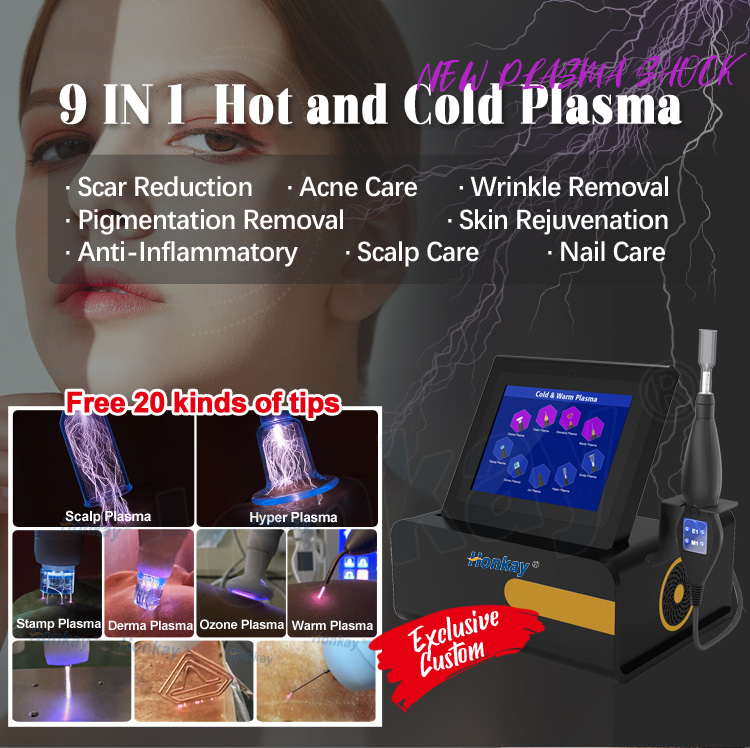
The strongest argument for a combined hot and cold plasma machine is operational: one capital purchase instead of two, one training track, one warranty, one service ticket — and a treatment menu you can expand as demand grows. On combination platforms, cold heads handle calming, oil-control and absorption-focused work while warm heads handle lifting, firming and precision spot work, so an operator can run both service types back to back without changing machines.

Compact cordless pen for targeted pores, texture and precision work. OEM available.
View product →
Collagen-supporting lift work for face, neck and targeted zones; home and professional use.
View product →
One handle, nine functions — from anti-aging to acne-prone skin care menus.
View product →
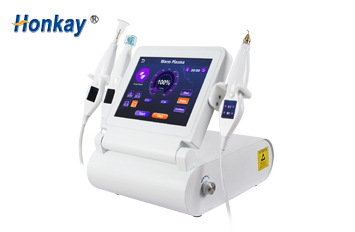
3 handles, 6 work heads, 10.4" touch screen; 2-year main machine warranty; OEM/ODM.
View product →
Patented gourd-shaped handle targeting acne-prone skin, scalp and nail care menus.
View product →
No-downtime calming and oil-control service for sensitive skin clients.
View product →Is a fibroblast plasma pen better than cold plasma?
Neither is "better" — they solve different requests. Fibroblast pens deliver targeted, point-by-point tightening with about a week of visible recovery; cold plasma delivers no-downtime, full-area care. Many businesses offer both.
Which has less downtime?
Cold plasma, by a wide margin. Fibroblast work forms small crusts for roughly 5–10 days; cold plasma clients typically show at most mild redness that fades within hours.
Can one machine do both?
Yes. Combined hot & cold plasma platforms carry separate cold and warm heads on one chassis — for example the 9-in-1 machines above — so one purchase, one training and one warranty covers both service types.
Which should a new salon buy first?
Most start with cold plasma: no-downtime treatments are easier to sell and staff, and the 4–6 session course builds repeat visits from day one. Add fibroblast work when premium targeted bookings justify it.
Do fibroblast pens cost more to run?
They use replaceable needle tips, so there is a small recurring consumable cost. Cold plasma heads generally have no consumables — factor this into your per-treatment margin math.
What about training?
Fibroblast results depend heavily on operator technique, so choose a supplier that includes training and protocols. Cold plasma operation is simpler to learn — another reason it onboards staff faster.
"Cold plasma vs fibroblast" is not a fight — it is a menu decision. Cold plasma builds your high-frequency, no-downtime, repeat-visit business and suits every skin type on your client list. Fibroblast plasma pens build your premium, targeted, appointment-planned tightening business. Single studios usually start cold; chains and distributors are strongest offering both — ideally through a combined hot & cold plasma machine that keeps training, warranty and service unified. Whichever you choose, verify plasma generation method, consumables, training, warranty and certificates before you order, and the plasma category will pay its way into your menu.
Honkay is a beauty-equipment manufacturer specializing in plasma devices for salons, spas, skin-care centers and distributors — with factory-direct pricing, OEM/ODM branding, CE/EMC/ROHS/LVD documentation, online training with every unit and a written warranty. Tell our team which treatments you plan to offer and your target country, and we will confirm the right handle set, voltage and shipping method for your market.


 English
 中文