Key Takeaways
Most salon owners first meet "plasma" as a single category — a modern, comfortable beauty device. But when you start comparing units, the words jet, arc and ozone show up everywhere, and it is rarely explained what each one actually does on the treatment bed. They are not rival brands; they describe three different ways the device delivers plasma energy to the skin. Understanding the difference is the difference between buying a device and buying a menu. This guide breaks down each mode in plain language, with the salon use case that matters to your business.

| Feature | Jet Plasma | Arc (Fibroblast) Plasma | Ozone Plasma |
|---|---|---|---|
| How it reaches the skin | Contact-free, floating stream | Pinpoint contact at the tip | Contact + ozone released at the surface |
| What clients feel | A cool, airy sweep | A tiny, precise tap | A fresh, purifying touch |
| Best for | Broad calming care, full-face refresh | Delicate zones, firming-looking care (eye, neck) | Blemish-prone, oily, clarifying care |
| Typical session | 20–40 minutes | 15–30 minutes | 20–35 minutes |
| Fits which menu | Relaxation & glow add-on | Premium eye/neck course | Clarifying, purifying service |
| Common device form | Pen or console | Precision pen | Pen or console with ozone module |
Jet plasma projects a fine, floating stream of plasma just above the skin — no tip touches the surface. Because there is no contact, the session feels like a cool, weightless sweep, and it is easy to cover a broad area such as the full face or décolleté in one sitting. Salons use jet mode for calming, glow-focused care: a refresh clients book regularly because it feels relaxing and leaves the skin looking cared-for. It is the natural "intro" service that gets a first-time plasma client comfortable before they move on to more targeted work.

Arc plasma — often sold as "fibroblast" — works through a pinpoint contact at the pen tip. That precision is exactly why it shines on delicate zones where clients want firmer-looking, smoother care: the eye area, the neck and the jawline. A studio can build a premium eye & neck course around arc mode, sold as a 4–6 session package at a higher ticket than a standard facial. For distributors, an arc demo is the fastest way to show a salon owner a service they can charge more for with the same machine.

Ozone plasma pairs the plasma field with a measured release of ozone at the skin surface. In a beauty setting it is positioned for blemish-prone, oily and clarifying care — the kind of purifying service that appeals to younger clients and to anyone managing shine and breakouts. It is a strong companion to a facial menu: offer it as a clarifying upgrade, or bundle it into a "reset" session. Many buyers like ozone mode because it gives the device a second, clearly different story to tell on the menu — not just glow, but purification.

Usually not. Modern plasma platforms — especially multi-handle consoles — combine these modes on one chassis. A single unit might run jet for glow, arc for eye/neck, and ozone for clarifying care, plus warm and cold settings for comfort and versatility. That is the buying logic a smart salon owner should lead with: rather than three devices, one platform powers three (or more) paid services. It lowers the capital outlay, simplifies training, and lets you launch new menu items without new hardware.
Start with the mode that fits the clients you already have. A studio with a strong facial base can add jet glow care as an easy upsell; one serving appearance-focused clients can lead with an arc eye/neck course. Ozone is the natural third once you want a clarifying option for younger or blemish-prone clients.
Standardization is the win. Pick a multi-mode console, fix the session protocols for each mode, and roll the same three services out network-wide with uniform training and pricing. One device, one training deck, many locations.
Sell the menu, not the machine. A salon owner who sees one unit run a relaxing glow service, a premium eye/neck course and a clarifying ozone session understand immediately why it is worth stocking — the unit pays for itself across three revenue lines instead of one.
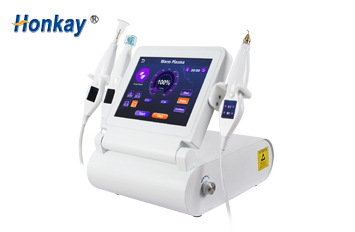
Compact, salon-grade pen covering jet and arc modes — the versatile hero for glow care and delicate-zone work, with OEM options for distributors.
View product →
A jet-and-ozone focused platform built around purifying, blemish-prone care — a clear second story to tell on any salon menu.
View product →
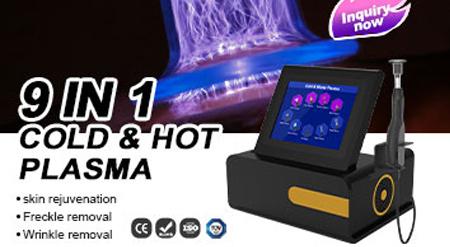
Multi-handle console combining ozone, warm and cold modes on one chassis — the all-in-one answer for studios scaling a full plasma menu.
View product →Are jet, arc and ozone three different machines?
Not necessarily. Many modern plasma platforms combine two or three of these modes in one device. When comparing units, check which modes are built in rather than assuming you need separate hardware.
Which mode should a new studio start with?
It depends on your existing menu. A facial-heavy studio adds jet glow care most easily; an appearance-focused clientele justifies leading with arc eye/neck courses; a younger or blemish-prone client base is the natural fit for ozone clarifying care.
Is ozone plasma suitable for blemish-prone skin?
In a beauty-care frame, yes — it is positioned as a purifying, clarifying service. Keep the language in honest care-and-appearance terms and it fits comfortably alongside a standard facial menu.
Does any of this count as a medical treatment?
No. These are beauty-care services for the appearance of the skin. The honest care-and-appearance framing is exactly what makes them safe and comfortable to add to a salon or spa menu.
Can one device really run all three?
With a multi-mode platform, yes. That is the main buying point: one chassis, several paid services, lower capital and simpler training than stocking separate units.
Jet, arc and ozone are not competitors — they are three ways one technology serves your clients. Jet brings broad, soothing glow care; arc brings precise, premium eye and neck work; ozone brings a purifying, clarifying story. The buyers who win are the ones who stop comparing "a plasma machine" and start building a plasma menu — ideally on a multi-mode platform that runs all three from a single unit. Match the mode to the client in front of you, and one device becomes several recurring revenue lines.
Honkay is a beauty-equipment manufacturer specializing in plasma devices for salons, spas, skin-care centers and distributors — with factory-direct pricing, OEM/ODM branding, CE/EMC/ROHS/LVD documentation, online training with every unit and a written warranty. Tell our team which services you plan to offer (jet, arc, ozone or all three) and your target country, and we will confirm the right handle set, voltage and shipping method for your market.


 English
 中文